
From ₹5 TO ₹280: 50 years of Tea Garden Wages, Broken Promises, and the Politics of Assam’s Most Powerful Vote Bank?
 TheAdivasisMarch 17, 20267 Mins read11
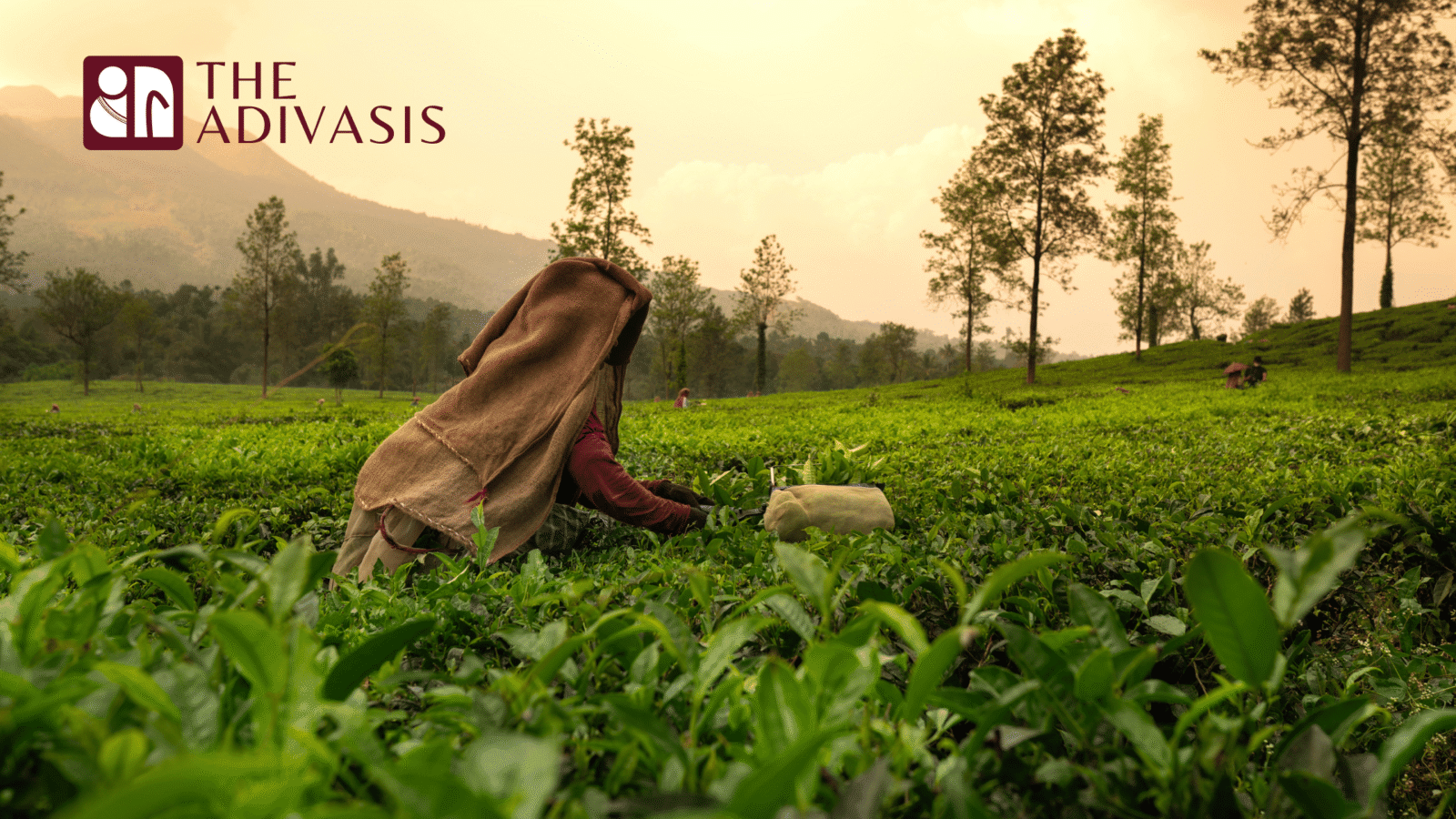
On March 7, 2026, the Assam government issued an official notification approving an interim daily wage hike of ₹30 for tea plantation workers, effective April 1, 2026. The decision came on the recommendation of the Minimum Wages Advisory Board for tea plantation workers, pushing the base daily tea garden wage to ₹280 in the Brahmaputra Valley and ₹258 in the Barak Valley.
Read Notification: Assam Govt Announces Rs. 30 Interim Wage Hike for Tea Garden Workers from April 1
To the untrained eye, it is a straightforward policy update — a modest raise for hardworking tea plantation workers. But to anyone who has followed Assam’s political economy for the past five decades, the announcement is far more layered: a story of industry profits, worker poverty, election calendars, and the enduring power of 10 lakhs voices at the ballot box.
A single kilogram of Assam tea — yielding roughly 500 cups — sells for ₹150 at auction. The worker who picked it earns ₹280 for an entire day’s labour.
An Industry Booming at the Top, Struggling at the Bottom
Assam produces over 50% of India’s total tea output, and by every commercial metric, the industry is thriving. In 2025-26, Assam’s tea exports surged by 40 million kilograms — the highest growth recorded in 25 years — while total production rose by 50 million kilograms.
India as a whole exported 280 million kilograms of tea worth ₹8,488 crore, approximately one billion US dollars, with Assam contributing the lion’s share. Orthodox tea, which constitutes nearly half of all exports, benefits from state incentives of up to ₹15 per kilogram, further boosting producer margins.
According to reports, major firms operating in the Assam tea belt — including publicly listed companies like Goodricke Group Ltd. — have demonstrated strong financial performance over the 2017-2025 period, with higher net profit ratios, earnings per share, and return on investment compared to regional peers. Auction prices hover between ₹150 and ₹156 per kilogram despite input cost pressures, sustaining healthy industry-wide margins.
Against this backdrop of record exports and rising profits sits a workforce of over one million registered workers earning ₹280 per day. At 26 working days per month, that translates to a monthly income of ₹7,280 — or roughly ₹87,000 per year. Labour costs in tea production account for less than ₹10 to ₹15 per kilogram of tea — well under 10% of the final auction price. The arithmetic is striking: the industry that fills India’s cups and earns India a billion dollars in foreign exchange pays the hands that pick its leaves a wage that falls below the national minimum.
Direct Comparison:
A Timeline Written in Rupees
To understand the significance of the April 2026 hike, one must trace the long timeline of tea garden wage history in Assam — a history that reflects not just economic policy, but shifting political winds across five decades.
| Period / Effective Date | Brahmaputra (₹) | Barak Valley (₹) | Event / Authority |
|---|---|---|---|
| 1970s–1980s | ~₹5–₹12 | ~₹4–₹10 | Early Tripartite Agreements |
| Jan 2000 | ₹48.50 | ₹39.00 | 2001 Agreement |
| Jan 2005 | ₹58.00 | ₹48.00 | ACMS-CCPA Agreement |
| Jan 2011 | ₹94.00 | ₹75.00 | Tripartite Agreement |
| Jan 2015 | ₹115.00 | ₹95.00 | Bipartite Agreement |
| Jan 2016 | ₹126.00 | ₹105.00 | 2015 Agreement Phase 2 |
| Jan 2017 | ₹137.00 | ₹115.00 | 2015 Agreement Final |
| Mar 2018 | ₹167.00 | ₹145.00 | ₹30 Interim Hike (BJP) |
| Feb 2021 | ₹205.00 | ₹183.00 | ₹38 Interim Hike |
| Aug 2022 | ₹232.00 | ₹210.00 | ₹27 Interim Hike |
| Oct 2023 | ₹250.00 | ₹228.00 | ₹18 Interim Hike |
| Apr 1, 2026 ★ | ₹280.00 | ₹258.00 | ₹30 Interim Hike (Latest) |
In the 1970s and 1980s, daily wages in Brahmaputra Valley tea gardens ranged from approximately ₹5 to ₹12, determined through early tripartite agreements between the government, worker unions, and garden management. Barak Valley workers earned even less. These were not wages — they were subsistence rations, keeping generations of Adivasi and tea plantation workers economically immobile within the garden colony system.
The turn of the millennium brought modest progress. The 2001 Agreement pushed wages to ₹48.50 in Brahmaputra Valley; the 2005 ACMS-CCPA Agreement raised the floor to ₹58. By January 2011, following sustained union pressure and growing political mobilisation among tea communities, wages nearly doubled to ₹94. The 2015 Bipartite Agreement introduced phased increases — ₹115 in January 2015, ₹126 in 2016, and ₹137 in 2017 — representing structured, if still inadequate, progress.
Then came a decisive shift. In March 2018, the BJP-led state government under Chief Minister Sarbananda Sonowal issued a government notification announcing a ₹30 interim hike, taking wages to ₹167 in Brahmaputra Valley and ₹145 in Barak Valley. This hike arrived just months before the 2019 Lok Sabha elections, fulfilling a key campaign promise and cementing the BJP’s appeal to the tea plantation workers electorate. It also introduced a pattern that would define the next eight years of wage policy in Assam.
Since 2018, every wage hike has been ‘interim.’ Not one has led to a permanent, legally binding tripartite settlement.
The Architecture of the ‘Interim Hike’
The word ‘interim’ (in literal meaning means ‘not final or lasting; temporary until somebody/something more permanent is found’) carries enormous political weight in the context of Assam tea wages. An interim hike provides workers ‘immediate relief’ — and governments immediate credit — without the binding obligations of a full tripartite wage settlement. It is a policy instrument perfectly designed for electoral politics: visible, photogenic, and legally non-committal.
Following the 2018 precedent, the BJP government delivered a ₹38 interim hike in February 2021, raising wages to ₹205 in Brahmaputra Valley and ₹183 in Barak Valley — timed ahead of Assam’s Assembly elections in April 2021, in which Chief Minister Himanta Biswa Sarma’s campaign placed tea garden welfare at the centre of its outreach. A ₹27 hike followed in August 2022 (₹232/₹210), and an ₹18 hike in October 2023 (₹250/₹228). The April 2026 ₹30 hike — the fifth consecutive interim measure — arrives as Assam enters the build-up to both local body elections and the 2026 Assembly election cycle.
None of the last four interim hikes has been succeeded by a permanent tripartite settlement that legally locks in the wage floor. What workers receive, in effect, is political generosity rather than legal protection — a distinction that labour rights advocates argue is far from semantic. Without a binding settlement, each increase depends on government initiative. Worker dependency on political announcements is not an accident of the system; critics argue it is its central feature.
The Politics of Ten Lakh Votes
Ten lakh registered workers, multiplied by an average family size of four to five people, yields an estimated 40 to 50 lakh individuals whose economic lives are directly tied to tea garden wages and welfare schemes. In Assam’s electoral geography — where Assembly seats are contested by narrow margins in densely populated tea belt constituencies — this is not merely a workforce. It is a political superpower.
The BJP under Himanta Biswa Sarma has pursued a sophisticated two-track strategy with this community: wage hikes as headline announcements, paired with structural welfare measures designed to build deeper loyalty. The government’s 2025 amendments to land rights legislation granted land pattas — formal ownership certificates — to 3.3 lakh tea garden workers, a move hailed by Prime Minister Narendra Modi as correcting a ‘historic injustice.’
Free ration distribution, housing under PM Awas Yojana, and ongoing discussions around extending reservation benefits to tea tribe communities have further reinforced the BJP’s positioning as a champion of the tea garden electorate.
The ₹30 hike announced for April 2026 (check notification above) arrives in this same political register. It follows the Minimum Wages Advisory Board’s recommendation at a meeting held on February 26, 2026 — a process that lends the announcement institutional legitimacy while allowing the Chief Minister’s government to take political ownership of the outcome. The notification, issued March 7, places the hike firmly in the public consciousness months before any election date is announced — long enough for worker families to feel the benefit, short enough to remain fresh at the ballot box.
Welfare vs. Rights: The Deepest Divide
The opposition’s response to the April 2026 hike has been predictable in its framing and pointed in its critique. Congress, AIUDF, and Adivasi-based organisations including All Adivasi Students Association of Assam (AASAA), and Assam Tea Tribes Students Association (ATTSA) have called the hike ‘tokenistic’, still exploitative, demanding a minimum daily wage of ₹500 or more and pointing to the absence of a binding tripartite settlement as evidence that workers are being managed rather than empowered.
The underlying debate is philosophical as much as political. The BJP’s welfare model frames wage increases and social schemes as acts of government benevolence — workers as grateful beneficiaries of state generosity. Rights advocates counter that workers are entitled to living wages as a legal right, independently negotiated by strong unions and enforced by statutory minimum wage frameworks, without political conditions or electoral calendars.
This distinction matters enormously in practice. Kerala’s tea plantation workers, organised under powerful and autonomous unions, earn ₹546 per day — nearly double Assam’s ₹280 — secured through legally binding collective agreements rather than government notifications. Tamil Nadu workers earn approximately ₹475 per day under full application of the Minimum Wages Act. Even Karnataka, at approximately ₹377 and rising, outpaces Assam’s tea belt. West Bengal, at around ₹250, is the only major tea-producing state in a comparable situation to Assam — and it too faces criticism for election-driven wage cycles.
| State | Daily Wage (~2026) | Notes |
|---|---|---|
| Kerala | ₹546 | Highest in India; strong union structures |
| Tamil Nadu | ~₹475 | Minimum Wages Act fully applied |
| Karnataka | ~₹377+ | Southern average consistently strong |
| Assam (Brahmaputra) | ₹280 | Post-April 2026 hike; includes rations/housing |
| Assam (Barak Valley) | ₹258 | Lower due to regional factors |
| West Bengal | ~₹250 | Similar to Assam; election-driven increases |
| Bihar / Tripura | ~₹175–176 | Lowest reported nationally |
Is ₹280 Enough? The Numbers Speak
The headline figure of ₹280 per day sounds, in isolation, like meaningful progress from the ₹5 of the 1970s — a 56-fold increase over fifty years. Cumulative gains since 2021 alone exceed 40% in the Brahmaputra Valley. But context dismantles the celebration.
At ₹280 per day across 26 working days, a tea garden worker earns ₹7,280 per month and approximately ₹87,000 per year is survivable, not dignified. National expert committees have recommended minimum wages of ₹375 to ₹700 per day (range), depending on region and cost of living. MGNREGA rates in Assam — a safety net wage designed for unskilled rural labour — already exceed ₹250 per day. The Seventh Pay Commission’s minimum salary for Central Government Class IV employees is substantially higher still.
For a family of four living in a garden colony — where food, healthcare, and education carry real out-of-pocket costs despite government schemes — ₹7,280 per month is survivable, not dignified. Tea workers earn less per day than the auction price of the tea they pick. A single kilogram of Assam tea — yielding approximately 500 cups — sells for ₹150 at auction. A worker who picks 20 to 30 kilograms in a day generates auction revenue of ₹3,000 to ₹4,500 for the garden — and earns ₹280.
If exports, production, and profits have all increased, why does the wage of the tea worker still fall below the national minimum? That is the question the industry has not answered.
The Long Arc of an Unfinished Story
The April 1, 2026 wage hike is both a genuine improvement and a political act — and understanding it requires holding both truths simultaneously. For the worker who now earns ₹280 instead of ₹250, the increase is real and material. For the analyst watching Assam’s electoral calendar, the timing is unmistakable.
The deeper story — the one that stretches from ₹5 in the 1970s to ₹280 in 2026 — is a story about who controls the terms of labour in one of India’s most economically significant industries. It is a story about the difference between being given a wage and earning a right. It is about whether one million workers in Assam’s tea gardens are stakeholders in the industry that defines their lives, or whether they remain, as they have always been, its most essential and most underpaid asset.
Until a permanent, legally binding tripartite settlement replaces the succession of interim announcements — until the wage floor in Assam’s tea gardens reflects the industry’s record exports and rising profits rather than the approaching election cycle — that story remains, frustratingly and consequentially, unfinished.




PM Narendra Modi to Distribute Land Deeds to Assam Tea Garden Workers
Prime Minister Narendra Modi is set to distribute land deeds to thousands...
TheAdivasis1 Mins read
Assam Govt Announces Rs. 30 Interim Wage Hike for Tea Garden Workers from April 1
The Government of Assam has announced an interim increase of Rs. 30...
TheAdivasis2 Mins read
India’s Tea Exports to UAE, Iran, and Iraq in Danger from Strait of Hormuz Problems
India sends a lot of tea to countries like UAE, Iran, and...
TheAdivasis1 Mins read



Tocklai Tea Research Center launches New Healthy Green Tea Powder with 75% Less Caffeine
The Tea Research Association (TRA) Tocklai in Assam has launched a special new green...
TheAdivasis3 Mins read

Leave a comment